
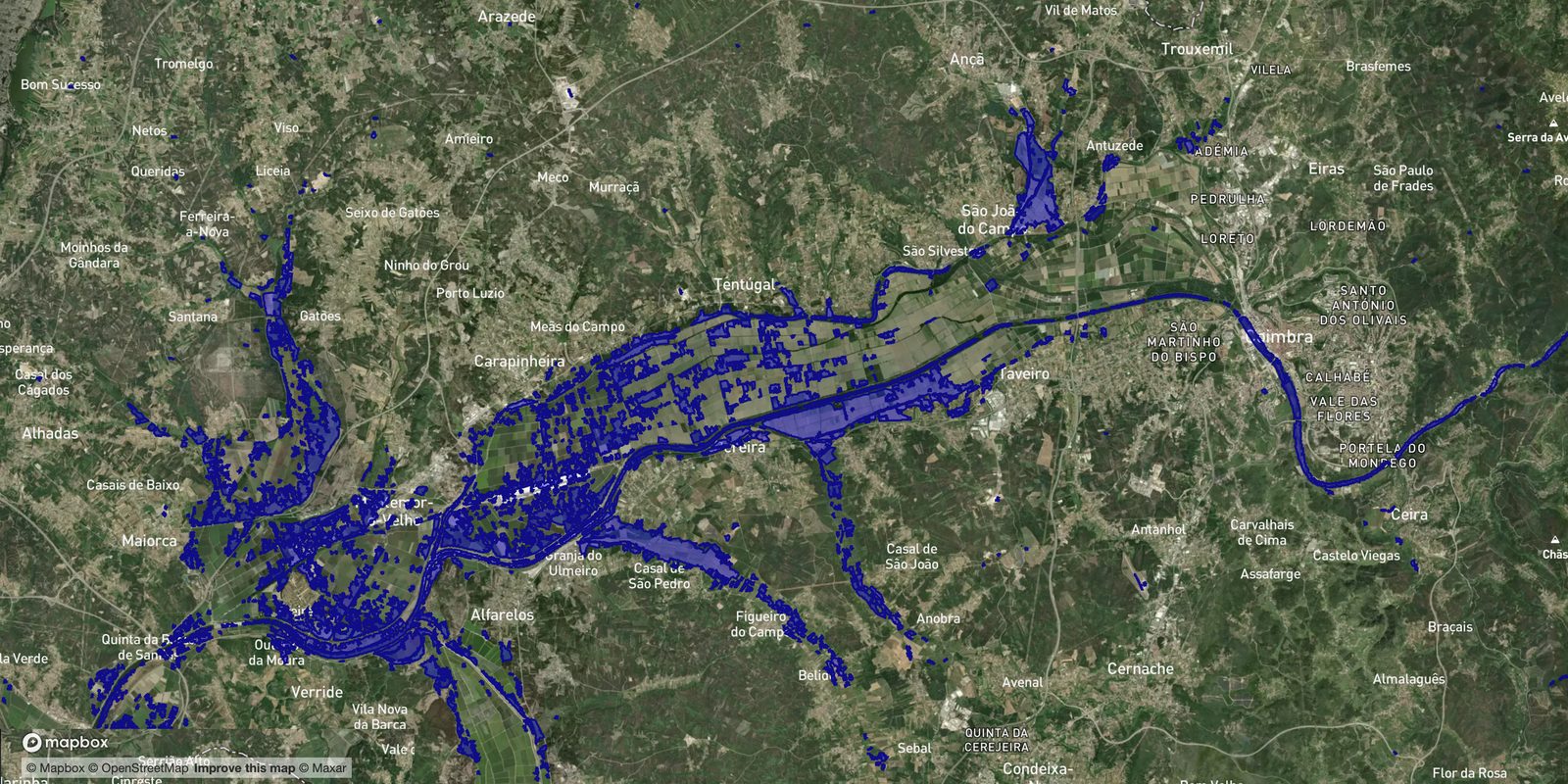
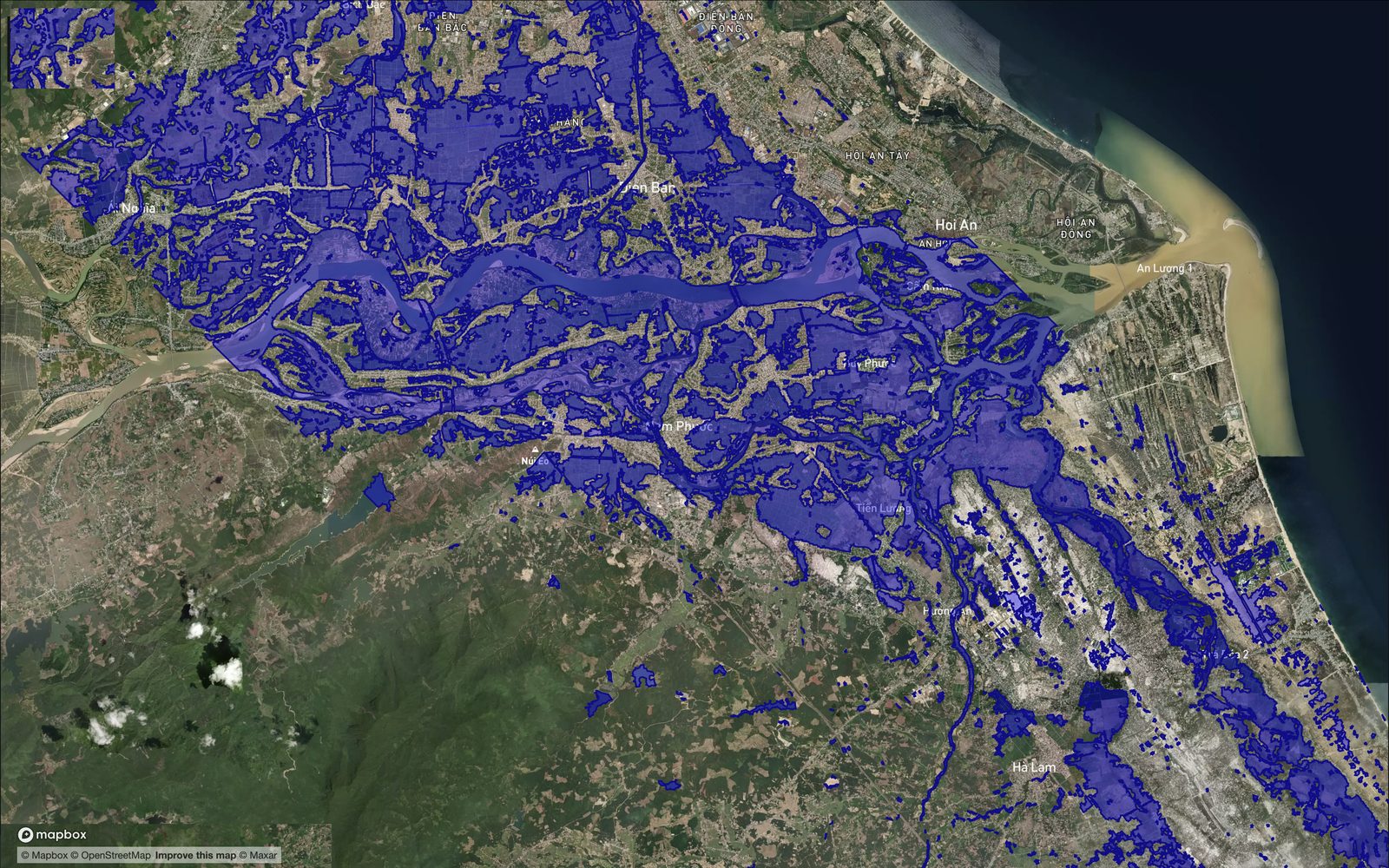
© Mapbox © OpenStreetMap © Maxar
What is FDA
Three challenges every flood response faces
First-response decisions are forced before the full picture is visible. Three structural causes lie behind it.
-
You can't observe in bad weather.
Optical satellites, aircraft and drones face observation gaps under cloud, rain, and darkness.
-
Wide-area assessment takes time.
Field surveys and drones cover limited ground and depend on people and time.
-
A slow start makes damage worse.
Without primary information, decisions on rescue, relief and asset response are delayed.
-
Solution Overview
-
FDA (Flood Damage Assessment) combines SAR (synthetic aperture radar) satellites with analytics to extract and map inundation extent automatically. Inundation depth and building damage assessments are available as custom services. Built for disaster response, FDA observes wide areas at night and in bad weather and delivers primary damage information quickly.
© Mapbox © OpenStreetMap © Maxar
Why Synspective's SAR analytics
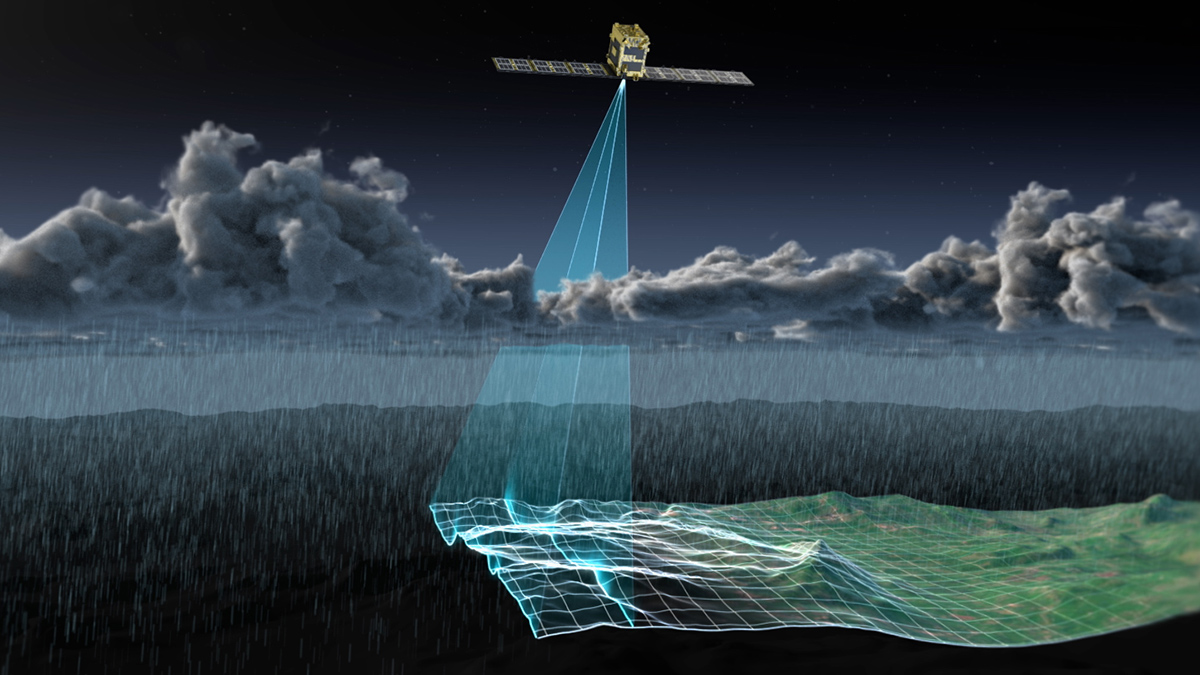
Conventional Synspective Weather & night Difficult All-weather, day-and-night observation Coverage Limited Wide areas in a single pass Analysis Manual checking Automated analysis
with advanced algorithms
-
How it works
-
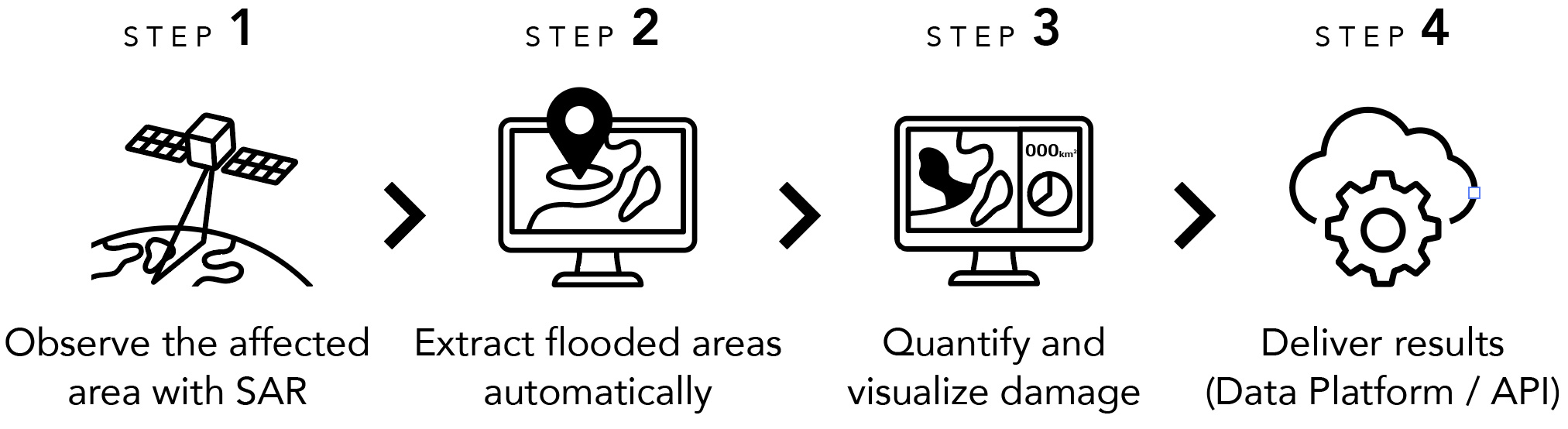
From observation to delivery in four steps
© Mapbox © OpenStreetMap
Analysis types
Inundation extent Standard, automated Inundation depth Custom service Building damage Custom service Delivery options
- Visualize and download on Data Platform
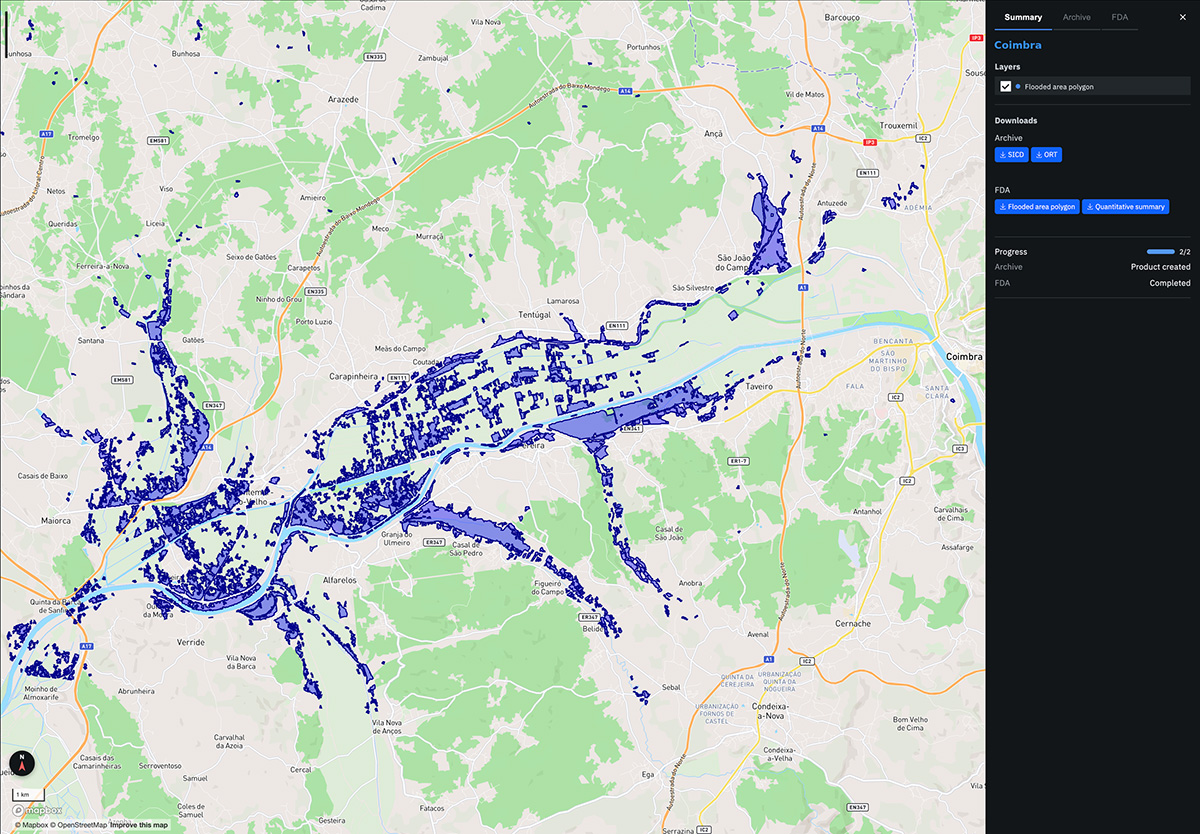
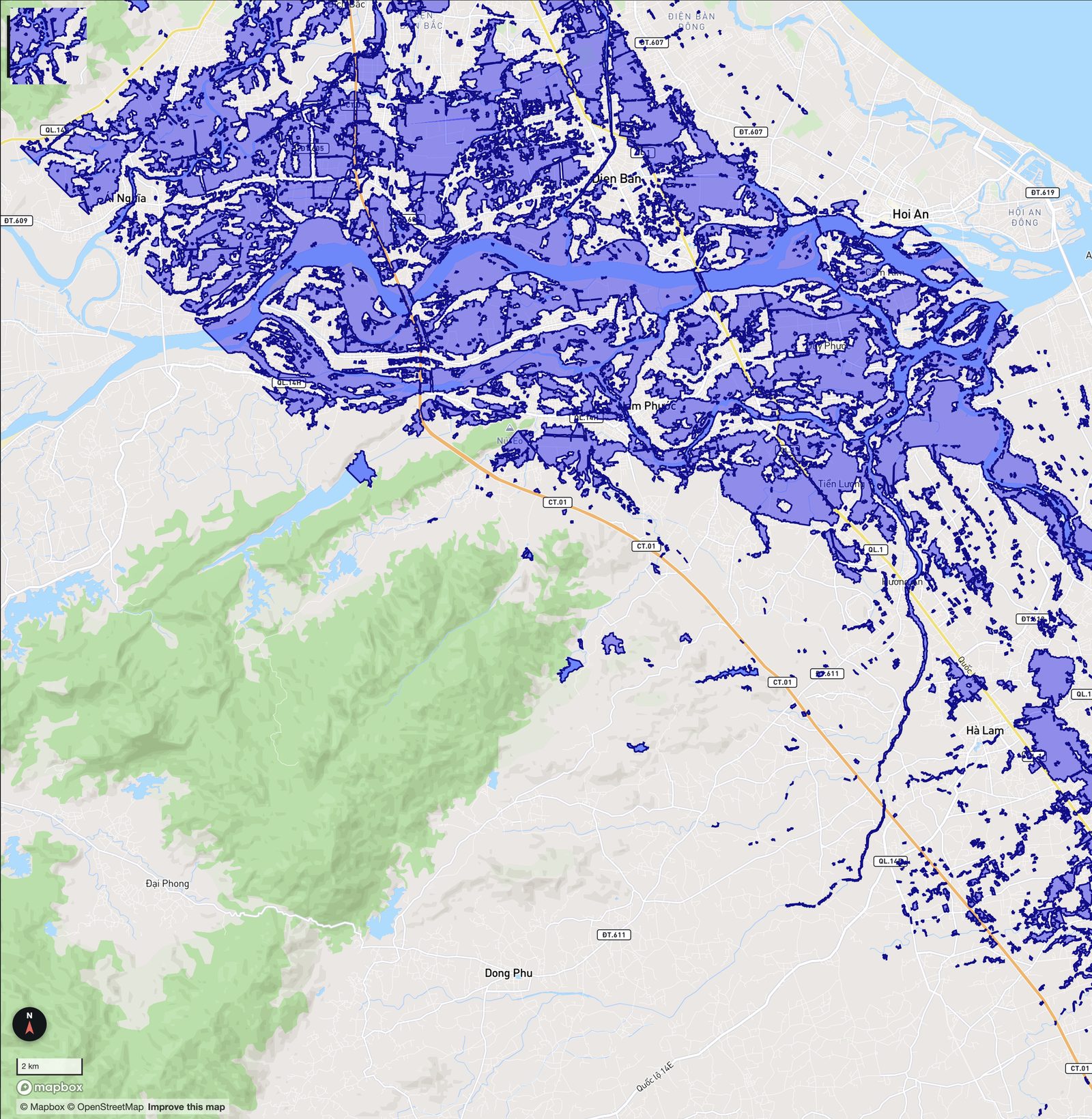
Review flood extent in the browser and download it directly.
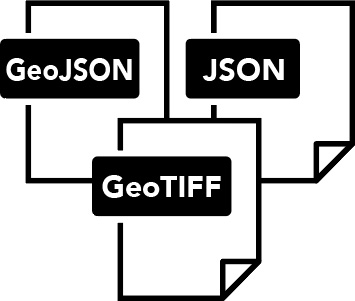
- Output formats
Analysis results: GeoJSON (flooded-area polygons), JSON (quantitative summary). Imagery: SICD, ORT (GeoTIFF).

- Direct delivery to your GIS platform
Receive analyzed data via API and feed it straight into the systems you already use. (Optional)
Wide-area coverage
© Mapbox © OpenStreetMap
-
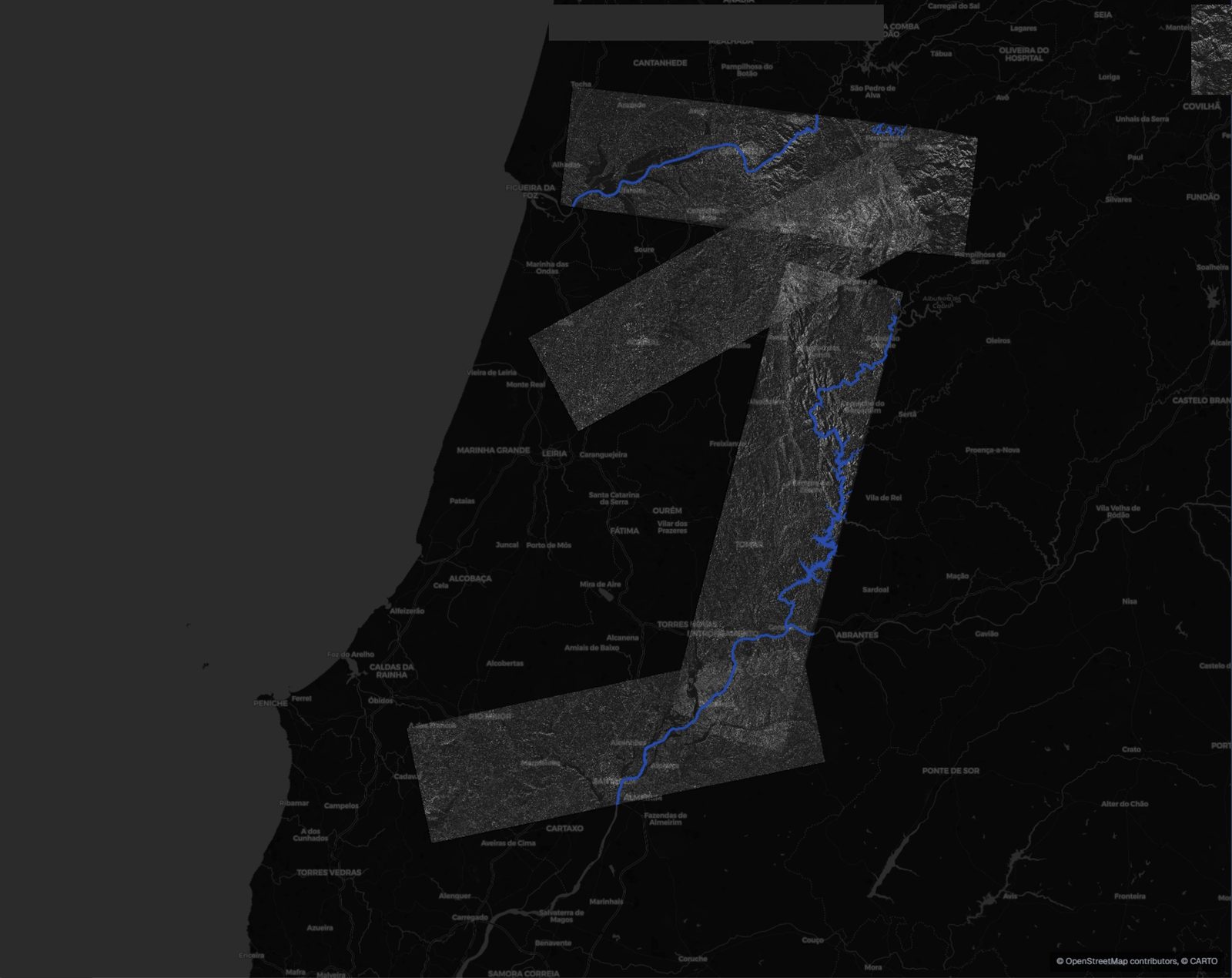
Up to ~1,000 km² in one pass Single Stripmap acquisition Stripmap 3 m
© OpenStreetMap contributors © CARTO
Stripmap scenes of about 20 × 50 km each combine to cover a wide area
Feature 1
Analysis keeps running while your team sleeps.
Fully automated workflow


-
As little as ~1 hour from imaging, typically within a few hours
*Imaging timing varies with satellite orbits and tasking conditions.
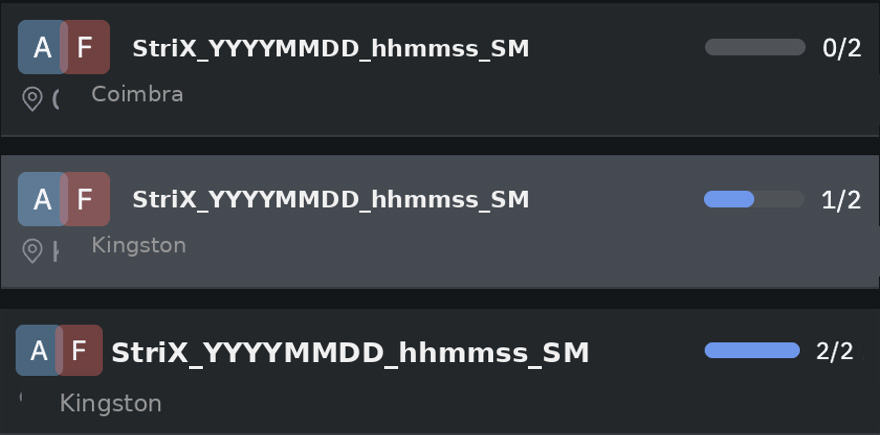
After the request, imaging (A) and flood analysis (F) advance automatically: 0/2 → 1/2 → 2/2
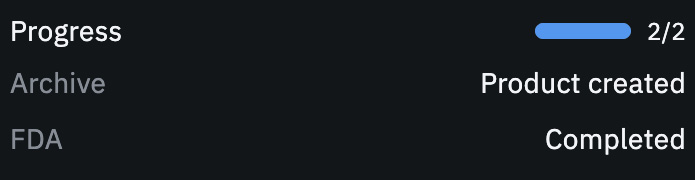
Shown as "Completed" on Data Platform when done
- Runs unattended at night and on holidays. No one needs to be at a desk.
- Cuts manual analysis and overtime.
-
All it takes.
© Mapbox © OpenStreetMap
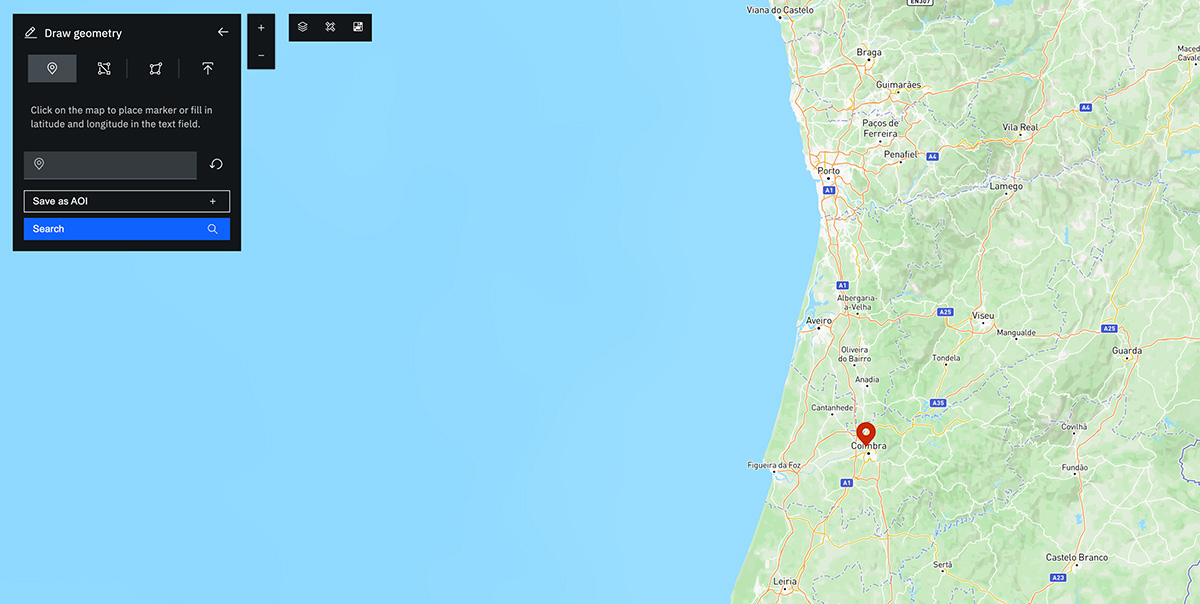
① Place a point on the map and create an AOI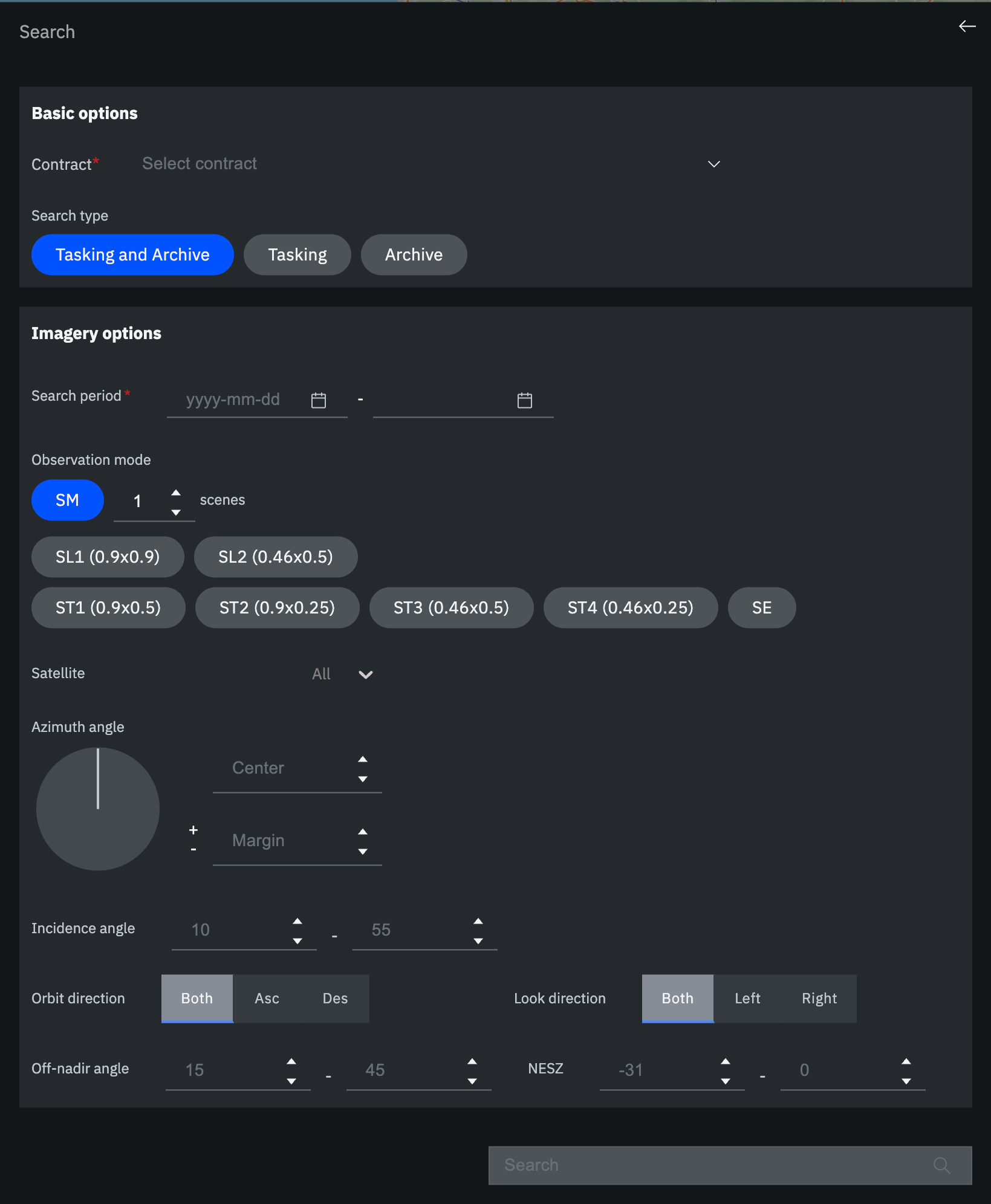 ② Choose contract, tasking or archive, and imaging mode, then search
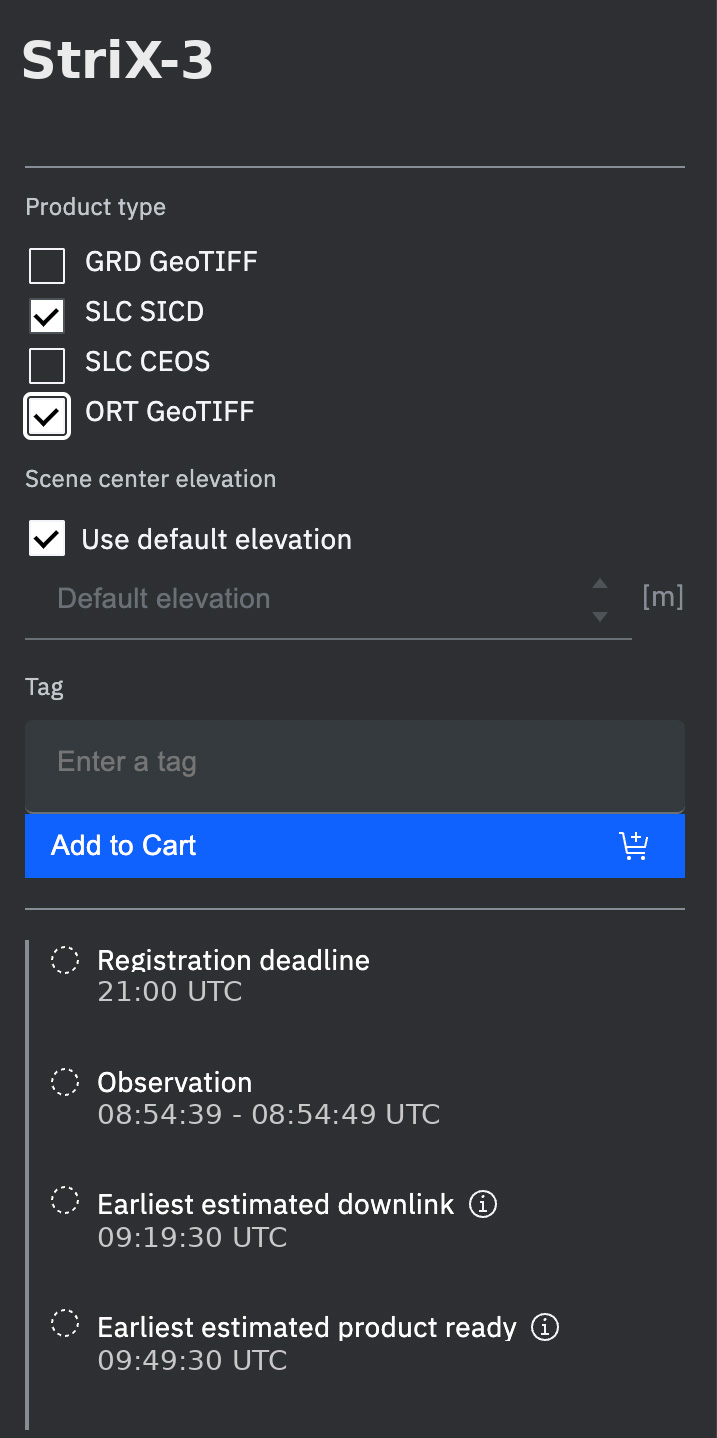
- ③ Check the imaging opportunity and expected timeline, then add to cart
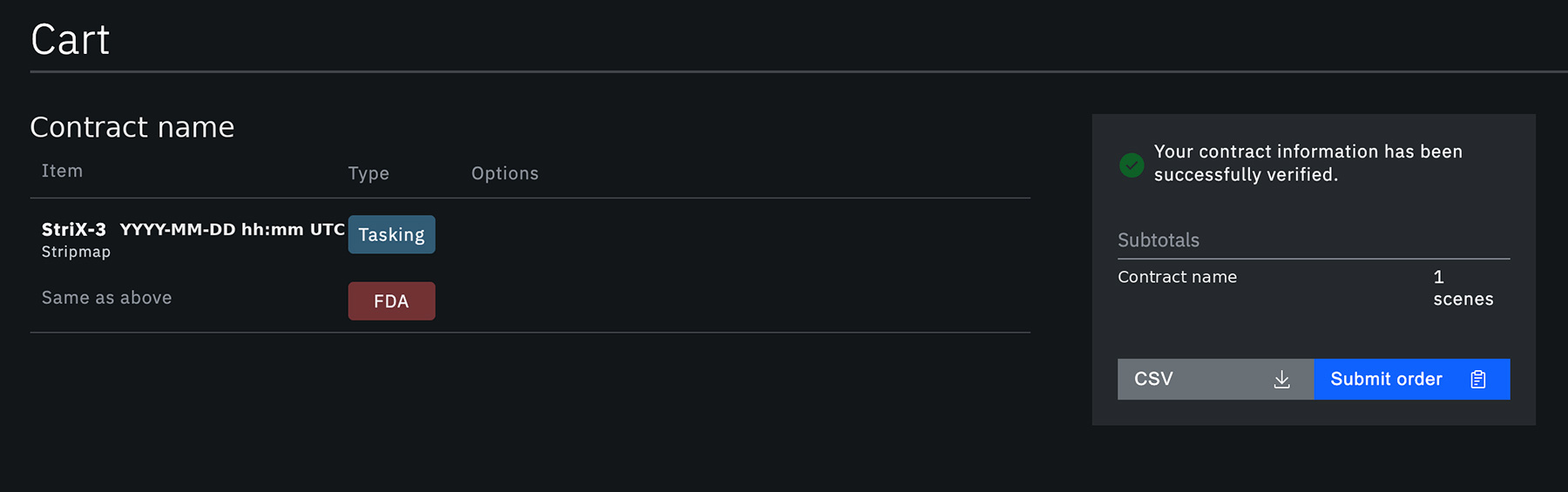 ④ Order imaging (Tasking) and flood analysis (FDA) together. Results arrive automatically
-
Feature 2
We own our satellites, so we can image right after a flood and keep coming back.
-
High-revisit observation with the StriX constellation
- Plans call for 10 satellites in operation in 2026 and more than 30 starting in 2028, with the aim of observing disasters worldwide about once an hour.
- We design and operate our own small SAR satellites. Third-party data arrives about once every 12 days. We can revisit anywhere from once a day to every few hours, depending on location.
- Repeated observation soon after the event, even for flash floods that spread within hours.

-
Benefits by user segment
What FDA does for your team
-
Disaster-management agencies :
National ministries, local governments and disaster agenciesNight or rain, see the damage without sending anyone out.
- Capture wide-area flooding from space at night and in storms, pinpoint affected areas and the extent of damage, and decide faster.
- Analysis runs automatically with no dedicated operator, so imagery captured overnight can be mapped by morning.
- Add eyes in orbit to your existing disaster information system or GIS, with no new hardware.
Construction consultants : Civil engineering and construction consultants
Stop losing the first response to data processing.
- Receive flood-extent data via API, drop it into your existing GIS workflow, and cut person-days from the first response.
- Get an objective view of flood extent within hours of imaging and shorten the lead time to your first report.
- Use observed flood extent the same day to validate your inundation and flood-simulation models.
Infrastructure operators : PowerTelecomRailRoadsLarge industrial plants
Stop shutting everything down just because you can't see the damage.
- Overlay your asset locations with flood extent via API to identify affected sites quickly.
- Prioritize recovery and arrange alternative routes a full day sooner.
- Narrow down affected sites early and keep shutdowns to a minimum.
Insurers : Property and casualty insurers
Eliminate delays in the first days of flood claims.
- Right after the event, even under cloud cover, turn wide-area flood extent into objective data and quickly see where your portfolio overlaps the damage.
- Estimate expected payouts and where to deploy adjusters before field surveys, speeding up claims decisions.
- Feed analyzed flood data straight into your claims and GIS systems via API.
